
 Since 1996, The Pictureville Cinema in Bradford has been home to the Widescreen Weekend, a festival that celebrates the widescreen film formats that went head to head in the 1950s war on television. Having just completed it’s 30th iteration, we catch up with lead programmer, Rebecca Hills to discuss how the programme has changed and, crucially, how it has stayed the same.
What does it mean to be celebrating 30 years of the Widescreen Weekend?
Oh my gosh. Makes me feel really old! We are one of the UK’s longest-running film festivals. And I think we’re just really proud it’s been going for so long. It hasn’t dwindled either. I feel like over the past couple of years we’ve really hit our stride with the program and the branding, and it means more and more people have decided not only to attend a screening, but to buy a pass and come to the whole thing. So even though we’ve been going for 30 years, people are still discovering the festival, and they’re still coming for the first time, which is really amazing. So I don’t think we’ll show any signs of slowing down anytime soon.
It’s great seeing how the festival has evolved and changed throughout the years whilst still keeping the ethos of paying homage to the widescreen cinema of the 50s and using that to explore how widescreen is being used in contemporary cinema and across world cinema. Also still championing film on film where possible. It’s seen a resurgence now but we’ve still managed to keep that going through 30 years.
It’s really nice that people are still coming and discovering the festival for the first time. This year we’ve actually sold the most amount of passes we’ve ever sold. It really shows it’s not dwindling away; it’s not showing any signs of slowing down.
Opening night film is Close Encounters of the Third Kind (1975). This is a movie that plays on television so much. What will audiences get out of seeing it on the big screen?
Actually, I hope people coming to Close Encounters are maybe seeing it for the first time. I think it’s one of those films that you hear a lot about or you see it playing on TV a lot, but you never actually sit down and watch it. I’ve spoken to a lot of people that have said, “oh I’m going to come and see it because I’ve never actually seen it”. If you are seeing it for the first time, I would say the only option is to see it on the big screen and on 70mm as well. This 70mm is brand new, it’s the director’s cut, Spielberg himself oversaw it. So hopefully it will blow people’s minds, even if they are seeing it for a second, third, or fourth time, because I think there’s nothing like seeing those classic films on the big screen anyway. But the fact that it’s like a newly struck 70mm would hopefully mean that the picture is amazing, and it will just look stunning in the auditorium.
I am going to caveat that I have never seen it, so I’m going to try and sit in the back and watch it. I’m going to be one of those people seeing it for the first time there. But I also think it’s a really nice film to have for opening night because you have to juggle so many different audiences. You’ve got your pass holders there and you’ve got your film fans and people that come to the festival, but you also have your stakeholders and sponsors and VIPs. So it’s really hard to find a film that would be relevant to everyone. And I think with Close Encounters, we’ve probably found that. I think it will go down well with people who don’t make film their lives like us.
We were quite lucky because opening night is always really tricky. It’s always the first film that we confirm in the programme, or it’s the last film. It’s always such a tricky slot to fill and annoyingly, this was the last film we confirmed. It went that way this year. But we’re really excited to have it. We’re really lucky to have the print as well because it’s still doing the rounds in America and is still really in demand in America. It’s nipping over to us for our screening, and then it’s going straight back. So it was really great for Sony to make that work for us.

So this year’s special focus format is Technirama, a sharper image alternative to CinemaScope. It’s a lesser-known format. What do you hope audiences will get out of the showcase?
I guess it is either refamiliarising themselves or just discovering those large formats. I don’t think there’s a huge difference I can tell between the different large-screen formats. I’m hoping that Widescreen Weekend, is accessible to where your love of film sits. If you are a bit more of a format nerd, or you know the tech stuff behind the shooting of films or projection and that kind of thing, then you can sit and benefit from the Technirama films and understand that technology and hopefully that enhances your love of the films that you’re seeing. But then equally, you can just come and not know anything about Technirama and just know it’s a large screen format and enjoy it for itself. But we chose it because it will be 70 years of the format.
In this format, we have a lot of Westerns from big names like Mann and Wyler, historical epics like The Vikings and Zulu, but also comedy in the form of The Pink Panther. How important is it to you to like offer up the kind of diversity of experience that was available in these at the time?
It was a really difficult one to put together because it does bring together some of those historical epics and big war films and westerns, which there is a little bit more contention around, or a bit more outdated ideas. So it was a tricky one to put together. We don’t take that stuff lightly; we do sit and watch and rewatch the films and have discussions. The big one is Zulu (1964), which our regulars have highly requested for our festival and is a great film, but it obviously has that British Empire kind of background, and it’s whether you still want to bring that to the forefront of the festival and your programming. We did come to the decision to include it because it is part of the Technirama celebration, and when it comes to widescreen films, cinematography, and the use of Technirama, it is a really great film. The colour with the blue skies and the red jackets; it is a really beautiful film. So we are showing it with a bit of a caveat and we will have an introduction that will kind of put it a little bit into perspective.
But it’s important not to shy away from including these kinds of films because we are a classic film festival. We’re not going to get away from it. And I do think it was an important one for us to include when we were looking at the Technirama focus and that narrative. But also it was really important for us to include stuff like The Pink Panther (1963) because, yeah, Technirama was great when it came to these sweeping epics and the films like El Cid (1961) and The Vikings (1958), where you’re showcasing the landscape. But it was still used for smaller screen comedies and things like that. So we did want to show a diverse range of films that really demonstrate Technirama, as well as to have a range of films that people can pick and choose and enjoy. There’s no point in having a season to showcase a format and then having only one genre of film, because if you’re not into that film, you’re not really going to explore that focus.
We’ve got musicals, we’ve got The Music Man (1962), we have The Pink Panther, which is comedy, and then my favourite film of the whole festival, Auntie Mame (1958), which is just great. It’s very ahead of its time, it’s really funny, the main character of Auntie Mame is just great, she’s kind of a queer icon and to be able to have something like that in the Technirama focus was really important. It means you can find a film you like and really explore the Technirama focus, rather than just have a load of Westerns. Which I’m sure would be great and fine, and I’m sure our regular festival goers would love that, but it’s important for us to provide a lot of diverse content so that we’re appealing to different types of audiences.

You’ve taken a very interesting combined approach to the national cinema strand this year, because we have a focus on Indian cinema, but specifically the Indian Western. The Western being such a quintessential component of cinema history, but also of Hollywood, how does that genre label interact with the films that you’ve picked?
I’m not going to take credit because we worked with a really amazing person called Dr Omar Ahmed, who has really great knowledge of South Asian cinema. We know the surface level of South Asian cinema, but to bring someone on board to help us program something with such a strong focus and to help with confirming rights and formats as well, because anyone who knows anything about South Asian cinema knows it’s really tricky to find the rights and a suitable format, so we were really lucky to have him on board.
As we were building the program, I started to see that we were blending old classic cinema and contemporary cinema together, and I think the Indian Western is a great example of that. We’ve got a film called Sonchiriya (2019), a contemporary film that reworks that traditional Western genre. So hopefully it will appeal to the kind of younger audiences, but also hopefully that Western genre angle will appeal to the kind of older audiences, and people have been coming for a long time. It was really nice to be able to have such a focused vision for the South Asian programme, but a focused vision that brings in some really strong elements of the old roadshow films and genres.
You have the showstopper strand, and musicals have always been such a huge part of the Widescreen Weekend offering. And this year you have The Sound of Music (1965) and Moulin Rouge (2001). Why are musicals so fundamentally suited to the large screen and the big format?
We worked with someone really great on that strand; Dominic Broomfield McHugh, who’s worked on the festival with us previously. He did last year’s Julie Andrews kind of focus. His knowledge of musicals is just so vast and diverse that it really helped build that strand. I think musicals are such a great focus because they highlight the widescreen aspect ratio of the big roadshow films of the 1950s and 60s. They’re also just really accessible. I think they do appeal to the general film lover and I do find that when we have a musical playing, whether it’s in the festival or the general film programme, they do well for us, and a wide range of audiences and age groups come to them.
It could be that people are coming because they know The Sound of Music or they’re coming to see Moulin Rouge, but then they might take a punt on going to watch something that they’ve not seen before, within that strand. That’s why we like to have a different range of films within that focus and within that strand; it means that people can pick and choose and not be alienated by a genre that they don’t like or affiliate with.
It’s always just nice to have musicals in the programme because it’s less serious. I feel like you can just get bogged down because quite a lot of the old widescreen films can be like these big historical epics or biblical epics, and it’s just like “let’s put a musical on a Friday night”. Sometimes people just want to go and have a nice time, enjoy a film, and have a bit of escapism.

Naturally you have some Cinerama screenings, and it’s wonderful to see How the West has Won (1962) back in the programme, which was a huge part of the very first widescreen weekend. It’s also exciting for people to have a chance to see Grand Prix (1966) in this very singular format. Can you tell us about Cinerama and the impact that format tends to have on people?
We’re incredibly lucky to have the projection facilities that we do at the National Science and Media Museum, especially within Pictureville Cinema. We are the only public venue that can screen Cinerama at the moment and we’re really lucky to have very talented projectionists who can still project it. For those who don’t know, true Cinerama is 3-strip projection. So three times everything: 3 projectionists, 3 projectors, projecting simultaneously. So we are really lucky to still have the skills within our team to be able to do that.
I think that really brings people to the festival; the fact that we can still show it in the way that it’s supposed to be seen brings people from all over to our festival, including America and Australia. So we will always have that element within the festival programme. It gets a bit tricky every year because obviously prints fade and get worn down. But we do try and show print where possible for Cinerama because it is such a one-of-a-kind demonstration. And I think there is a fascination and a love of the projection of Cinerama, as well as seeing it on the curved screen. So we try to do that the best we can, but it’s not always possible because the availability of prints is very slim.
We do show digital Cinerama as well, so people can still experience the curved screen and the spectacle of it all. But on film we are showing This is Cinerama. We’re very lucky to have prints from the Cinerama Dome in Hollywood. These prints have been in storage for a long time, especially because of the closure of the Hollywood Dome during COVID. So we’ve brought them over, and they are in very, very, very good condition. People will really appreciate how good nick the prints are compared to the one that we have that we like bring out every year, which is getting very faded. It’s like a new lease of life for Cinerama.
It’s just really nice to have How the West was Won back in the programme as well. It’s always a crowd pleaser and I think it’s important to not have it every year, but to keep it in the narrative because obviously it was one of the first feature films that was shot in Cinerama, so it adds to the narrative of cinema history and the history of Cinerama as well. So even though I love all of the really kitsch travelogues, it’s really nice to have a narrative feature film in the mix, too.
It’s great to be able to project print but the digital is also spectacular because I think the thing with Cinerama is the curved screen and like the wide image and that you feel completely immersed and the showmanship of the red curtains kind of opening and stuff like that and I think you can enjoy that whether it’s print or digital. So yeah, it’s nice for us to have both options in the festival, I think.
You’ve always collaborated with wonderful people, and you’ve mentioned a few today with people you’ve worked with. But within the programme, you’ve advertised some of the screenings as being in collaboration with certain sort of programming partners, which I think is new. I’m thinking specifically of The Cook, The Thief, his Wife and Her Lover and Blazing Saddles.
Yeah, this will be the first year that we’ve done that. Since City of Culture last year, we’ve done a lot more collaboration with local DIY film clubs and programmers. There’s always a lot of demand, especially within West Yorkshire, where we have a really thriving DIY film scene, but they’re always in village halls or back rooms of pubs. But there are a lot of really talented film programmers who want to work with print. So we offered our venue up for people who were wanting to experiment with print. And Rat Depot are a really, really talented set of programmers that operate in Leeds. And they really know their stuff when it comes to print as well. So we worked with them a few times last year just by hosting them and just loaning our cinema spaces to some of their programming and we just thought that it might be really cool to introduce that element into the festival, especially because we are seeing more and more audiences come to the festival that are more into cult stuff. Maybe we’ll see more of it in future Widescreen weekends.
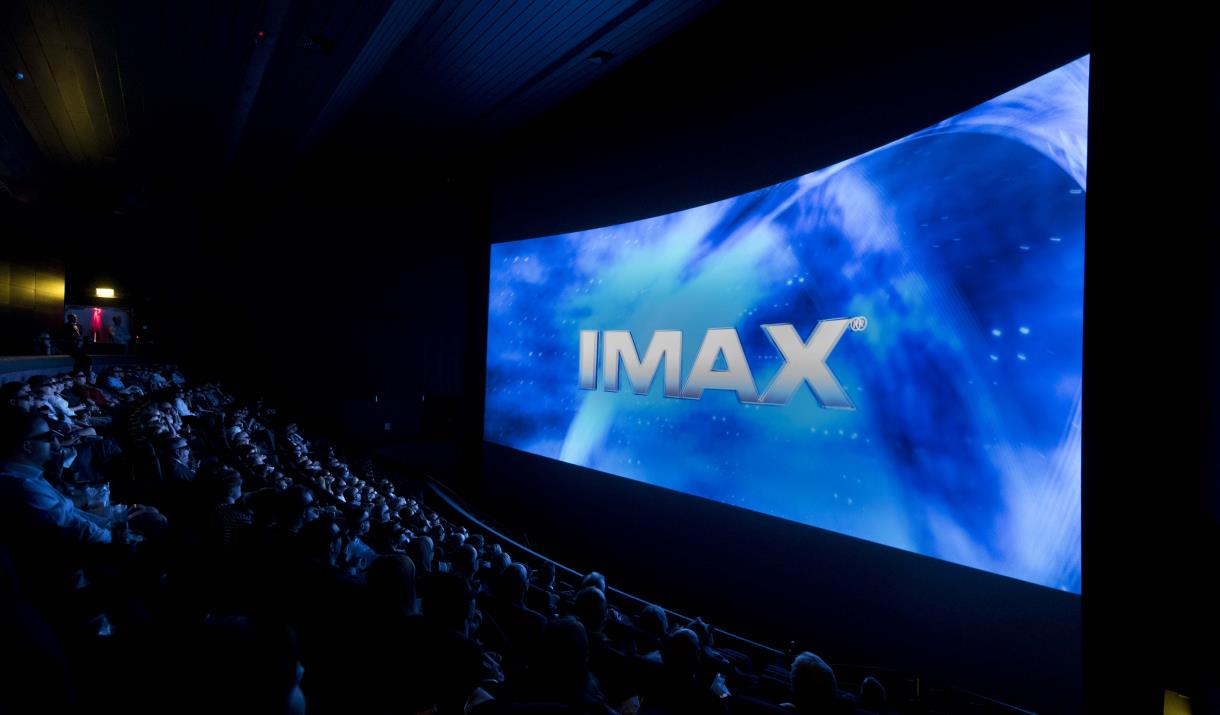
You have a lot of IMAX films this year, I wonder how you feel about how this reflects the relationship between Widescreen Weekend and contemporary cinema.
I think this is probably the biggest IMAX programme we’ve had in a widescreen weekend. And a little bit of it is the fact that we’re just trying to appeal to different audiences and bring them to the festival. It is a lot of contemporary film by directors that people will know, especially because they’ve got films out this year: Nolan and Spielberg. But even with Sinners doing the Oscar sweep this year, they’re films that are on people’s radar. So hopefully we can bring in people to the festival that haven’t come before or don’t think it’s a festival for them, and the hope is that they would go and watch a film in IMAX, and then they might experiment with something in The Pictureville and The Cubby.
But also it does have an element to the whole film format and projection storyline. It might not be technically wide screen, it’s tall screen, but it’s still exploring different types of filmmaking. Nolan always does really well to bring that to the spotlight and to bring that to people’s attention, and the fact that he does put films out in different formats like IMAX but also 70mm and 35 mm, and explains the difference between them, and still uses quite traditional ways of filmmaking, adds to the big story of cinema and cinema history and filmmaking and formats, which is what we explore in The Pictureville.
At the heart of the film festival, there are just people going to watch films because we love films. We want to go and watch stuff on the big screen and have a really fun night out or day out and revisit some of the films that we love on the big screen. And that might be a 1950s, 60s musical, or that might be the more recent Nolan stuff. We don’t discriminate. Everyone’s classic cinema is different. Bringing the IMAX into the programme a little bit more helps us appeal to different audiences and different age ranges, but it still tells the story of filmmaking and film formats.
This being the 30th anniversary makes one think of legacy and the longevity of these programs and the traditions of Widescreen Weekend. Is there any one screening or screenings, that you’re most excited to add to the legacy of Widescreen Weekend?
Good question. I think really showcasing a perfect blend of the old and the new. The fact that we have included One Battle After Another on 70mm, whichused VistaVision, a classic cinema format that we had a focus on a few years back, its like new filmmakers rediscovering old techniques, which then brings them right to the forefront of people’s minds again. Hopefully, it means that they can then go back and revisit when VistaVision or another cinema technique was first being established.
The Sound of Music is one of them as well. It’s a classic film title, but that is going to be on 70mm which means that we can project it on our curved Cinerama screen. So again, it’s blending the old and the new. It’s a newly struck print but it is not a new film. But we can show it on the curved screen and showcase that old, 1950s format like new!
I think we’re always going to keep looking for opportunities to show a contemporary film but then use it to look at older films shot in a similar way or in a similar format. I think it helps just like connect everything together. I think we’re at a really exciting time with filmmaking, and I do think formats are coming back into people’s periphery, so it would be silly of us not to make use of that. Hopefully we can keep going, and there’ll be new prints and new directors using old formats and techniques, and we can keep showing those films.
The Pictureville Cinema has events throughout the year including Cinerama and other curved screen presentations.